Having already researched Jane Bowler for my interior project after experimenting with materials in order for me to gain some interesting prints and drawings, I learnt more about her at todays lecture. I found her ideas and relaxed attidtue inspiring and learn that it's who you know and making contacts that is vital. I also recognised that she makes a lot of garments that are necessarily wearable which has made me think further about my fashion project- maybe I could make a statement piece that isn't particularly practical? In relation to my Research Report, Jane mentioned that she has started making earrings out of the materials she is using by connecting them together and selling them in Topshop to connect to a different type of audience and demographic. This has made me think about how you don't have to focus on just one audience when creating products or garments.
After the lecture a couple of us from the Craft Co group, took the promo photograph using my camera and tripod. We took various photos using the tools each one of us will be using to suggest the outcomes we will exhibiting and to hopefully cause some questioning for what we are making.
I also had my research report draft feedback with Jill, which has reassured me that my writing isn't as bad as I thought and has made me realised that I just need to continue with it in order to gain further feedback from it from my Sam Epps tutorial.
Today I visited London with my housemate who studied Fashion at NUA. We visited various farbic shops and then visited the Material Lab so I could study formica and other materials for my interior project.
There was lots of inspiration here, there were samples of Formica that I picked up as ell as other laminate flooring brands. I also found a designer who used wooden shapes and magnets which inspired me to use magnets in my work. I could use magnets to change the compositions in the designs in the hostel.
I also visited Liberty and found inspiration from here on their floors. They used a parquet design with multiple colours and also multiple printed materials. They also had plain pieces of wood in the design to break up the pattern.
| walls in the material lab |
| Bobenna design |
| liberty floor |
| liberty floor |
I learnt how to machine knit this week, in hope that this would help me further develop sampling for my fashion project. David taught me the basics of domestic machine knitting and the taught me the duibed knitting. I found this so difficult and time consuming but I am happy to continue to learn this process, I started then creating windows of empty space by casting off then knitting then casting on again.
I started using the domestic machine further and using white polyester yarn so that I could print on top of this.
I am unsure whether this process is worth my time and whether I should continue doing this, I want to create the empty areas and negative space in knit or fabric. I could try this further by using other cut out processes like laser cutting and bonding other materials together and cutting out areas or printing on top?
![]() |
| initial inspiration for this idea |
| my sampling using fine wool on the dubbed |
| casting off areas to create negative space |
After volunteering for Craft Co, we had our initial meeting and have been thinking about how this could co-inside with my current projects. I need to make a quality product which is unique and intriguing as well as showing my ability, skills and innovation. I want this to be an opportunity to test ideas and get my name out there. I am initially thinking of using my wooden planks as an idea and some how making these into jewellery, coasters or tiles. I was thinking maybe the print on these items could tesselate and match up or maybe not match up? A problem I might come across is fitting this into my schedule as I did not initially fit this in to my timetable so I need to find out how make time for this project. I am excited about this opportunity and I think it will beneficial and link with my research report.
I have had such a hectic weekend, doing uni work almost every spare minute I have had. On friday I spent the afternoon indigo dyeing some tote bags that I aim to sell at the Christmas Market- which didn't go too successfully. So on Saturday I spent a little while trying to decide what to do with them, I have ironed the ones that worked better but some were very pale, which means I will have to re dye them, meaning I will lose the shibori pattern!! I plan to make some labels (to patch on the front) using sublimation this week in preparation for Thursday where I hand them in. I have spent all of today (Sunday) trying to get through some of my research report, which again, hasn't been particularly successful. I am finding it so overwhelming, as I know how big it has to be at the end. Because I have such a large amount of research, it is so difficult to be selective and edit the most accurate and relevant information which I can analyse well. Using Pat Francis' advice, I have been trying to WIDEL but this is hard when I have goals to meet and practical work to do too!
I have been drawing for the fashion project, mainly my photographing collections of objects then editing them using photoshop to develop them creating more "drawings". From the sticker stencil idea from Nick, I have been using spray paint over objects to create negative space drawings. I quite like this concept and have further developed this by printing out the developed photographs and used a craft knife to cut out the spaces, leaving the negative, outer space behind. I have been using both parts of the cut out creating negative and positive space when spray painting over them. Tomorrow morning I am booked into the print room, to play with resist on screen with some stencil thats i have created using acetate and card.
This evening I have been researching into colour palettes, on WGSN, tumblr and instagram to create a solid selection of colour palettes to help me tomorrow in the print room. I plan to print mainly on papers but I will use some fabrics too- I am thinking about using the CAD embroider soon to develop my designs in to samples. This might not be the path I choose but its an idea- especially after attending the advanced CAD workshop the other day.
After mind mapping and researching this weekend I had some initial ideas which evolved around the idea of found objects as I touched on this in my interior project and wanted to take this futher. I had a little look in the library and found and incredible book called Everything We Touch by Paula Zuccotti. IT IS AMAZING. The whole concept is brilliant and truly intriguing. I think I am intrigued by it because it explores humans in a specific way just by looking at their objects which gives a small insight into their everyday life, it feels like you understand and know the person just by looking at the gorgeous photo of the objects laid on the white back drop. The photos are taken with so much care and are considered well which has inspired me to do a similar thing to get my fashion project started.
In the group crit today, Nick also liked the book and made me realise the different ways the objects were photographed. Some are in a grid format, some in a more collaged fashion. I love how all the objects are photographed together in one go which gives you a bigger picture and a different insight compared to if they were photographed individually.
Nick and the others also seemed excited about my initial ideas. He mentioned about artists who dismantle and crush found objects and things the only exist in the moment? He also said about photographing my personal items together in one go but also trying to photograph then individually. I was unsure how I would transfer these drawings (or photographs) into designs for fashion. Nick mentioned about photographing my clothes against a white background then printing these onto another piece of clothing and skewing it slightly so it was shifted out of place, which I thought was interesting. I could tape my objects to walls or tape outfits onto walls or even project an outfit onto somebody. Which could be interesting for final designs. I said that I wanted to tell a narrative in my work- a bit like the book I was inspired by. Some peers in the group mentioned about asking people about their belongings or even asking a certain amount of people what they had in their pockets. Nick mentioned that this could narrow down the path of my project which I completely understood when he said this. As most people don't have important, meaningful objects in their pockets these days, so I would end up with snotty tissues, pennies and old receipts. I still want to develop the idea of getting others involved (as almost a human experiment), I just need to think further on this idea.
To get me started though I will begin photographing my personal objects in a taxonomy style, looking at different combinations of objects creating collections of colour, material and function. Nick also mentioned about using things as stencils as resist (like the bi product of a sticker book) and using spray paint to get the negative b. I will use this concept and try to think of doing this with objects that I have.
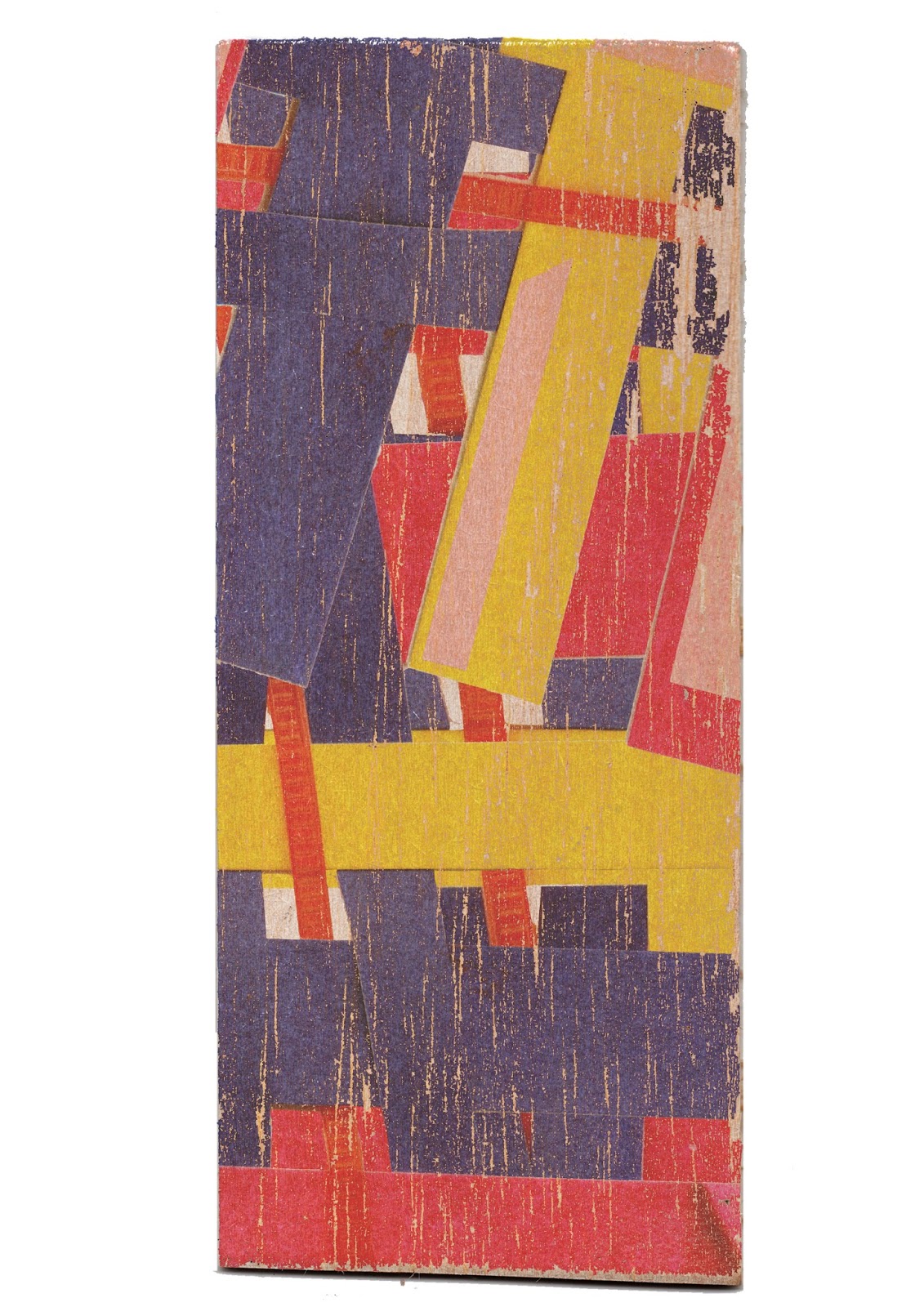
Its time to gather my designs/drawings/sampling and think about designing the final pieces. I have many mini designs on wood and I have started manipulating imagery/collage/drawing/material experimentation on photoshop and overlaying these on a scan of the wood I was using, to quickly visualise the design on the wood. I am not planning on using the wood as a final material. I was going to use the wood as part of the design as the texture and colour pay off works really well, I plan to apply this to floor and wall vinyl for the final samples. I will show this by presenting the design on paper then suggesting the vinyl that it would be used on, in a hostel context. I need to think about how I present my designs- do I have the floor and wall design as one whole design with spaces of plain wood/design in between to break up the design and pattern so it sits better in situ? I have done some visual research to help me decide with this (below). I think hints of the design and pattern would work really well as a statement floor and wall design piece- almost like an installation but on the wall and floor so it has more purpose.
I have printed out lots small wood designs to then build up a whole floor and wall design physically rather than using photoshop, just so I can get a feel of how this would look. I have been photographing them but I could stick them down or even put the design against different flooring and walls to see how they would look in context. I much prefer being hands on and my work having a handmade look which I guess links to my research report. I try my best to use little digital process because I like the unique bespoke concept of handmade work. However, digital process doesn't mean that they won't be bespoke and have handmade process too. My final designs will be digital but will be made up of many handmade processes to get to the final design.
I have also used the physical printed wood pieces to create larger parquet designs to see how they fit together- I quite like how some of the designs/colour carries on to the wooden piece next to it as it looks like they fit together well- I could intentionally do this on photoshop so the design flows but still has a patchwork vibe to it?
| playing with overlaying and stacking wooden design- using the idea of collage |
| sublimated wood designs placed into to a "sort of" parquet design |
| using the printed wood to replicate a interior space- looking at floor and wall- continuous |
| sublimated wood designs placed into to a "sort of" parquet design |
| sublimated wood designs with melted tape placed into to a "sort of" parquet design |
| close up of small cut out of scans/photoshopped designs placed into to a "sort of" parquet design |
| close up of small cut out of scans/photoshopped designs placed into to a "sort of" parquet design |
| close up of small cut out of scans/photoshopped designs placed into to a "sort of" parquet design |
Today I played around further with the wood from the uni shop as this has worked well previously with sublimation. I applied a paper weave (scanned and printed on the sublimation printer) to a small piece of wood, it turned out really well and I am so pleased with it. I applied skinny pieces of masking tape in stripes on the wood before printing to see if it would resist or do something interesting. The texture is still there despite it being a fairly flat print from the sublimation process, the masking tape really boosted the tonal value, the colour became more vivid on the masking tape therefore there was brighter vertical stripes of the printed weave which adds something interesting.
Pat Francis' session today was so inspiring, it made me think in different ways, doing things differently and making things easier for myself. Pat touched on how to reflect, refine and consider research differently, through ideas and metaphors which help you remember them. As we are creatives, she showed us 'hands on' ways to narrow down research and describe objects in a detailed manner.
What I will take from todays session:
- Write it down, edit it later (WIDLE)- I find myself getting stuck and giving up easily, once in the flow of writing, Pat said that things will come more naturally and you will be able to explain what you mean after going back to it. "if you cant think of a word-leave a space and go back later"
- Filter idea- start with broad ideas and points, filter it down to important ideas then reflect and dig deeper. (use a coffee filter as a physical example)
- Brick by brick- third year is the brick wall, take things brick by brick, whether it is a sentence per brick or a project per brick.Take one thing at a time!
- Write a blurb if you get stuck. A blurb summarises your ideas which means it will get you back on track and make you realise what you are doing or what you want to be doing. (write this on a postcard as you can only fit a small amount on them)
- Do the same thing, in a different style. Whether practical or written, if you get stuck, Pat said to do that one thing in a different way, whether it is writing it differently, applying it to a different context etc. The shape you see things in different ways.
- Brainstorm/list/break down/do bits/develop bits/join bits/re-order bits/do technical bits/proof read/finish. This handout was particularly handy, Pat stated that you didn't have do things in the order they would finally be in. She said to just write things down and refer to quotations and things will come together. She also finds it easier to the introduction at the end as many people find that daunting- which i do! She said to start off with a quotation and depict and unfold it as much as possible to then get a fully understanding.
After weaving yesterday with the acrylic warp and polyester warp and the technical yarns for the weft, I have spent today sublimating on top of them with collaged scans of drawings, screen printed papers and woven materials. I found that the acrylic warp created a paler colour result, which looked interesting with a polyester or rubco yarn in the weft as it looked like small stitches and distorted the printed composition. I have documented my tests and findings in my technical file which has helped me remember the timings and techniques used with the heat press. I also found that the leftover sublimation paper had insetting patterns and textures on it (which translates well to my drawings). The weave acted a resist when removing the colour- I could purposely do this and use objects as a resist to create a more textured sublimated paper and then continue to scan this and enhance it. I plan to either use this interesting paper as a secondary print or even scan this in and digitally enhance it then print it again using sublimation to then apply again to fabric.
When heat pressing the weave with cables in the weft, it did move a lot and curl which made the weave turn into a melted curve shape which I didn't think was particularly strong. I could use the cables further by inserting them into paper weaves or other weaves to create an unconventional weave structure.
After finishing off the warp on my rigid heddle loom the other day and printing on some samples (fairly successfully) I thought I must warp it up again today with some polyester, so I can test out printing on them again with sublimation. It only took me a couple of hours to thread it up. I used some plain white polyester from fairfield yarns and also thought I would try out using some white acrylic yarn that I found in a charity shop. I thought I would try and put both of these warps on the loom in one go to see how that worked?
I experimented with the melted straws and cables to then re melt this week in the heat press to see what happens.
Todays lecture from Amy Cogden was massively inspiring. She explained her process and journey from NUA in 2009 to where she is now, studying her PHD. It was so inspiring to hear her experiences and her problem solving and determination. Her interests with science and bacteria doesn't directly link to my current work but I do find it really exciting. I love her rigorous use of documentation and recording; it has reminded me to record well to get the best results. She also explained how she reflects and refines to ensure she doest go off on a tangent- which I think relates to me right now. I am experimenting and playing with materials and keep finding my self getting too excited about the results and not recording them accurately enough to repeat the process again.
I am going to weave this evening with polyester to then print on with the collaged papers.
Today, I also experimented with three different yarns I ordered from Hand Weavers. I also aim to weave with these tonight on my rigid heddle loom to then print on tomorrow with the papers I printed earlier. I look forward to see the results as the three yarns and very different properties, which link to my structural drawings.
From the ideas from Nicks session, I gathered lots materials, like straws, cable ties and cables. I also had some found plastic mesh (which I have started to weave into) and old cables and wires that I had collected . The idea was to weave and collage these found materials, which linked with my theme of colour on the street. I experimented with melting cables and straws etc then weaving, weaving them beforehand then melting them together to fuse them. This proved fairly difficult, as the cables and straws moved around a lot when under the heat press. The cables, laid side by side, crossed over or woven together didn't look how I hoped as the colours became merged and slightly muddy. They also didn't lay flat, I tried to solve this by using tape and other things to hold it down flat but it still didn't look right. I thought the idea was there, having the melted plastic encased my the unmelted wire which gave it structure, I just need to think about how I can develop and transfer this idea by using a different technique or material.
The melting of straws worked well I just learnt to wait for them to cool in order for them to keep their shape. This makes me think that maybe I could remove them quickly from the heat to then shape them so they cooled and kept the shape I put them in? I collaged and melted the straws together more but realised that the colours were letting me down. I then bought some wider, clear straws, in the hope I could dye or print on these. Hopefully I can weave with these, then print on top, print on top or them or dye then and then weave them together? I could also think about melting them onto other found materials like wood or cables?
Todays tutorial with Will was super helpful! The ideas from yesterdays session have already developed and I think my context is finally sorted! Will gave my ideas to apply my designs to a Hostel context and designs for flooring. Which has made me think further about how I could sample! I plan to experiment widely with materials and material manipulation with colour and collage and then I plan to scan these in and digitally manipulate them applying them to some type of flooring? He gave me the idea of the parquet flooring which gives me an idea on how it will look- a structured textured patchwork floor! I need to research into the types of materials that would be suitable for a Hostel; thinking about durability, cleaning, longevity and design. I will be designing for St Christopher's Inn hostel, imagining that there is one in Norwich. I found that in the collab projects in year 2, setting myself a clear precise brief helped me so much, doing this will keep me on the right tracks and enable me to research fully into the context and materials. I need to email St Christoper's Inn and ask them some questions about material and design. I also need to speak to flooring companies.
I was thinking about also designing for the walls as well as the floors, maybe evening combining them so that the design doesn't stop at the floor and carries up on the wall? I need to find a material that is suitable for both. I also need to check how many final designs I need as this will change how I design things.
I have used the my first fabric collages (sublimation) to help me visuals the floor and wall concept, folding the fabric in half at a right angle, to make it look like a room. I find this an easy way to think about scale and design.
Will also suggested looking at Kinship on WGSN which looks at global and cultural patterns combined, he specifically said too look at the video! He advised to photography my collages of materials and drawings on different surfaces like old tile floors and use found, inappropriate objects to inform the photographs. He suggested to even recreate traditional flooring, like I said before- looking into parquet flooring and researching into different flooring designs. I like the idea I had of applying the floor to the wall so that the floor doesn't stop- I need to see how practical this will be in the hostel though!
[insert scan of pink sheet]
Today was really useful to see others' work and see the different stages people were at. I described my troubles with sampling and context and felt like I was helped and given so many new ideas. I could combine weave and print (as I had already thought) but not necessarily just weave with yarn? I could use rubco yarn and search for more yarns that melt or do interesting things? Nick suggested to use wires and cables as well as other found yarn-like materials. Working with found wood was also suggested to me which I feel like I will take on board. This reminded me of a book I read in the library in the first week of this project about a lady who made "scrap quilts" out of colourful shapes of wood. This has made me think about creating collages and compositions of materials and drawings and photographing them in different ways.
I am still thinking about something in Airbnb for my context but not much was said about that- this is something I can speak to Will about tomorrow? I just want my context to be sort of public which links to travel and hospitality.
Knowing I had to move my work further from my drawings, I began scanning in my paper weaves and collages. I edited them slightly on photoshop then spoke to Neil about sublimation printing so I could quickly lay down my loose colour palette onto fabric and start manipulating. After printing my imagery, textures and colour out, I started carefully cutting and tearing using my drawings to guide me. I explored different polyester fabrics, some worked better and others made the colour more muted. This was due to the cotton content in the fabric. I am looking for fairly bright, true colours so I need to be mindful of what fabrics I choose to use. As I was just testing out this process today, I was using off-cuts of fabric but I will continue this on Monday and will buy the polyester jersey fabric, which worked well today. I really like the quality of my samples today, it has made me think further how I could develop this. I could further use weave/ structured elements by weaving fabrics yarns or papers, as I think my drawings look like they could relate well to weave. This actually was my planned sampling method- but I don't mind if things don't go as planned. I like how this process has just worked for me, just from a few small ideas from Jill's workshop on Wednesday.
I have a good collection of drawings and ideas/research now but just unsure how to sample- is this partly because I am still not certain on my context?
Jills workshop today has helped me translate some drawing into print, it has helped me refine the shape and line in my work. Today has enabled me to think how I could further develop these mini samples i have quickly created from my drawings. I essentially see this samples as more drawings as I collaged the sublimation papers together and then transferred them onto fabric- I really like the results but I feel as if they need more texture to them.
I could sublimation print with some of my scanned drawings, colours or designs on photoshop and combine collage techniques with these- also could try different materials to sublimate onto? Could melt materials with sublimation print?
I could also use weaving as a base for sublimation? I could weave polyester fabrics then print on top?- would I have to re warp my rigid heddle loom (currently has cotton warp)? what would happened if I had two different fibres in weaves?
I could weave with indigo warp and use log cabin technique to relate block colours and collage drawings?
I have a lot of things to think about, I need to continue drawing and decide on my context in detail to then help me with my sampling options.